Online Learning and Staying Engaged
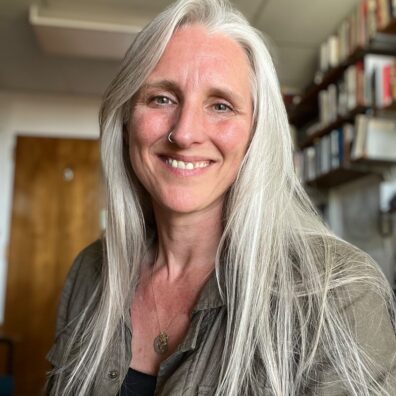
This conversation is part of our Faculty FaceTime series, featuring the educators who bring WSU Global Campus to life.
Dr. Shawna Herzog, Associate Professor of History at Washington State University, has taught at WSU since 2012 and with WSU Global Campus since 2014, specializing in world and European history.
The following transcript has been lightly edited for clarity and flow.
Misconceptions About Online Education
Q: What are some of the biggest misconceptions about online education, and how would you address them?
A: Some of the biggest misconceptions that I had—even for myself, because I used to call it “online school”—were that Global Campus was easier and not as rigorous and that the same amount of learning didn’t really happen. That was my misconception.
Then I started teaching for WSU Global Campus and realized very quickly that that’s completely incorrect. WSU Global Campus courses have absolutely the same rigor. I teach the same material in my face-to-face courses as I have in my online courses. I would also say that those courses can be more rigorous and sometimes more difficult, because I expect engagement, there is a little bit more reading, and it isn’t a place where you’re able to check out in the way you sometimes can in an in-seat course.
How To Keep Online Students Engaged
Q: As a faculty member, how do you help Global Campus students stay engaged and connected in a remote format?
A: Keeping students engaged is the magic key for all instructors, whether you’re in person or on WSU Global Campus. In my classes, I do that by using a variety of modalities to reach each student’s preferred learning method. Some students prefer reading, some prefer videos and will ask for them, and others prefer lectures.
For me, this goes back to meeting students where they are. I craft my course according to the students who are in it. The course is set up so that, all the way through, there are different activities—documentaries, discussions, reading primary sources, etc. But as I move through, I also ask my students, “how is this working for you?” Sometimes we’ll have more documentaries because that’s what the students enjoy. Sometimes we’ll have more reading or more novels because that’s what they enjoy.
When I talk about engaging with my students, I mean that I get to know them specifically. That’s one of the great things about WSU history: it is tailored to specific students. Many people assume that online or Global Campus means distance learning in the sense that you’re distant from your instructor, and they might feel they’re not really going to learn. But in my courses, at least for WSU history at Global Campus, the program helps make history more accessible for people who can’t come to campus.
Her Love for Global Campus Students
Q: What do you love most about working with Global Campus students?
A: What I love about WSU Global Campus students so much—and I think I’ve said this already—is the intentionality. When they sign up and take a class, it’s because it fits into their schedule. They have other things going on: they’re managing jobs, managing life. I really appreciate the intentionality they have in their assignments and the intention they put into their communication. It’s also very rewarding to me to know that I can help them and help them reach their goals.
—
To hear more from Dr. Herzog, read “Teaching, Mentorship & Meeting Online Students Where They Are,” or explore how history prepares students for real-world careers in “Building Valuable Skills Through Learning History.”