Building Valuable Skills Through Learning History
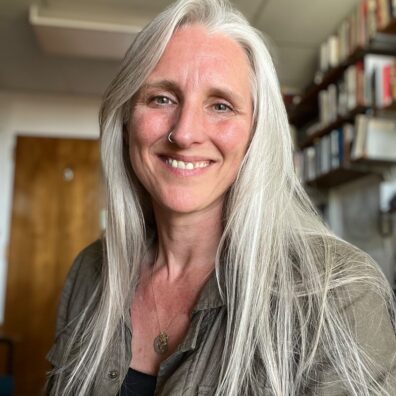
This conversation is part of our Faculty FaceTime series, featuring the educators who bring WSU Global Campus to life.
Dr. Shawna Herzog, Associate Professor of History at Washington State University, has taught at WSU since 2012 and with WSU Global Campus since 2014, specializing in world and European history.
The following transcript has been lightly edited for clarity and flow.
The Value of a History Degree
Q: What skills or knowledge do students gain from your program that prepares them for their careers?
A: This is the question that I love so much, just because many people think, “Oh, history. I don’t need a history degree. What would I use that for?” But the thing about history is that it’s one of those really exciting degrees that can help anybody do almost anything, really.
I made a list because people always talk about “critical thinking,” but what does that even mean? Critical thinking helps you understand multiple components of what people are telling you. It helps you better evaluate statements that people are making. People love to use the word “unprecedented.” If you have historical knowledge, you understand that nothing is really ever unprecedented.
History helps you deeply consider places, cultures, and ideas that you never thought of before. It offers you historical literacy. It helps you with professionalism by strengthening your attention to detail, timelines, deadlines, and collaboration—working with your fellow students, meeting deadlines, and managing timelines. All of that bolsters your professional skills, even if you’re already in a job.
And of course, there’s teamwork. Nobody really thinks of history as being a team sport or a team project, but it is. You can think of one thing, but it doesn’t really matter unless you actually talk about it with other people.
Getting a WSU Global Campus history degree really does help you better understand the world around you. It helps you better interact with people in your workplace and in your social environment. And also, I think it will help you become a better citizen. It helps you navigate your space a little better.
From Classroom to Community Impact
Q: Can you share a memorable story about a student you’ve mentored and their success?
A: I’ve been teaching since 2014, so I have a lot of stories, but one that really stood out to me was about how history impacted a student’s life.
The student was in my History 300 course, a research course, and they chose to research the same topic that I was researching at the time for my current project, which is Chinese immigration to the Pacific Northwest. The student was a retired attorney who had a passion for history and came back to get his degree “for no reason.”
He took my class, then took the next class, History 469, and graduated. I did get a really terrific note when he graduated, telling me how amazing his experience was, how much he loved the project he did, and that he was going to continue it.
About a year later, I received an email from his local historical society inviting me to my student’s talk. He was going to present his research there, and now he’s actually done that every single year since he graduated. This is now his fourth year.
He’s continuing this historical knowledge and passing it on to his community. That was pretty rewarding.
Advice for Future Global Campus Students
Q: If you could give one piece of advice to someone considering an online degree, what would it be?
A: The first thing is: do it. If you’re considering a WSU Global Campus degree, especially if you’re considering a Global history degree, absolutely do it. We’d love to have you.
Once you’ve made that choice, the top three things you need to do to be successful are to communicate with your instructor, take advantage of the special programs that WSU Global Campus has, and apply for scholarships. All of those things are available to Global Campus students.
So, if you’re considering a Global history degree, or just a Global Campus degree, do it. And then once you do it, know that there are the things that are available to make it easier and to help make sure that you’re successful.
—
For more of Dr. Herzog’s insights, read “Teaching, Mentorship & Meeting Online Students Where They Are,” or take a closer look at her thoughts on online learning in “Online Learning and Staying Engaged.”