The Truth About Online Education: A WSU Global Campus Faculty Perspective
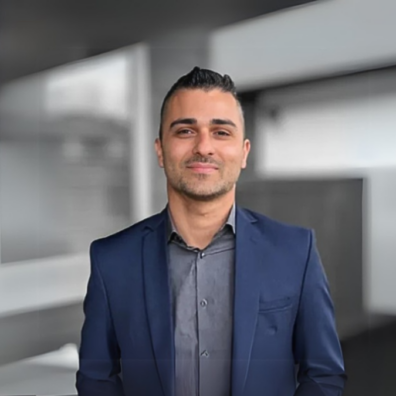
This conversation is part of our Faculty FaceTime series, featuring the educators who bring WSU Global Campus to life.
Dr. Imran Haider, Scholarly Assistant Professor and Director of Online Programs for the Edward R. Murrow College of Communication, has taught at the college level for more than 15 years — including five with WSU.
The following transcript has been lightly edited for clarity and flow.
The Real-World Skills Students Gain
Q: What skills or knowledge do students gain from your program that will prepare them for their careers?
A: We’re trying to really equip students with skills that would not only help them advance in their careers but also strengthen their personal and interpersonal abilities.
We work on building confidence—whether that’s speaking in front of a group or one-on-one—and doing so in a clear, structured way. Can they formulate their thoughts? Can they answer interview questions effectively?
For example, when students record a presentation, I provide feedback on what they did well and where they can improve. We often follow up through email or Zoom to discuss that feedback and continue developing those skills.
Debunking Myths About Online Learning
Q: What are some of the biggest misconceptions about online education? How would you address them?
A: Some of the biggest misconceptions about online education are that it’s boring, that professors are disconnected or not present, and that you don’t learn as much—or that it’s easy. And I’d say they’re false.
We engage with our students weekly, sometimes even daily. That includes providing feedback on assignments, participating in discussion boards, and holding office hours on virtual platforms. Your faculty member is committed—they know their content, and they want to be there teaching it. And it’s not easy. There are many ways of teaching, learning, and evaluating progress.
In my day, you’d read, attend class discussions, and take a Scantron test. Now, students still read, watch videos, engage in discussions, and take quizzes—it’s just happening online instead of in person. The goal is still engagement and retention. When students read, watch, or contribute to discussions, that’s how they learn and retain information.
It might not look like the traditional classroom experience, but the effort, the learning, and the results are the same. Online learning still takes time, effort, and commitment.
Keeping Students Engaged and Connected
Q: As a faculty member, how do you help Global Campus students stay engaged and connected?
A: It’s not easy—and part of that is being present. I have to show up on video, go into discussion threads, read their responses, and respond in meaningful ways. That might mean recording or typing a reply, or giving detailed feedback on an assignment, presentation, or paper—telling students what they did well and what they could improve.
Engagement is really about interpersonal exchange. When I go into an assignment or class, I try hard to provide thoughtful, personalized feedback. One thing I do that really helps with connection comes from the LIFT program I completed at WSU. I use a reflection exercise where students talk about why they’re in college, what challenges they’ve faced, and what might stand in the way of reaching their goals.
I read every single reflection and write a personal response for each student—and I have over 100 students this term. Some have told me they were shocked that I took the time to read everything and respond to their experiences directly.
That exercise helps me get to know my students and gives them a sense of being seen and supported. It’s something I really value because it strengthens engagement, morale, and connection in the class.
What Makes WSU Global Campus Unique
Q: What stands out as special or unique about the online degree programs you’re involved with through WSU Global Campus?
A: I’d say what’s unique about the Global Campus programs I’m involved with is that they’re part of the Murrow College.
I might be a little biased, but the skills, information, and experiences students get here are top-notch. You’re not just reading articles or watching videos—you’re interacting with faculty who are high-level experts, many with real industry experience. That combination of practical knowledge and academic depth really sets us apart.
When you finish your degree, you leave with a versatile skill set that prepares you for a wide range of careers. You could walk through a hundred different doors and be ready for any of them because you’ve built communication, critical thinking, and interpersonal skills that apply everywhere.
Our faculty bring both agency-level experience and research expertise into the classroom, connecting theory to real-world application. In my career, I haven’t seen another program that blends those elements at such a high level. The Murrow College—especially through Global Campus—produces graduates who are truly exceptional.
—
Dr. Haider’s insights reveal what truly defines online education at WSU Global Campus — rigor, engagement, and a genuine commitment to student success. From personalized feedback to meaningful connection, his approach shows how online learning can be every bit as powerful as the traditional classroom.
Read more from Dr. Haider in “Inside WSU Global Campus: Connecting with Students Around the World Through Online Learning” and “Mentorship, Motivation & Success in the Online Classroom” — part of our ongoing Faculty FaceTime series celebrating the educators who bring WSU Global Campus to life.