Inside WSU Global Campus: Connecting with Students Around the World Through Online Learning
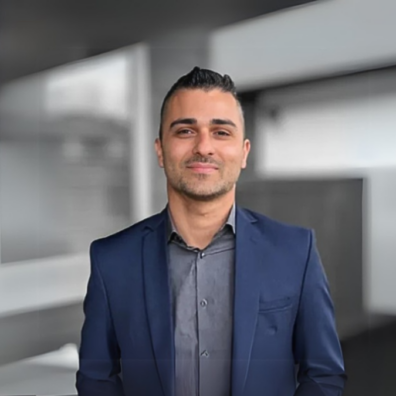
This conversation is part of our Faculty FaceTime series, featuring the educators who bring WSU Global Campus to life.
Dr. Imran Haider, Scholarly Assistant Professor and Director of Online Programs for the Edward R. Murrow College of Communication, has taught at the college level for more than 15 years — including five with WSU.
The following transcript has been lightly edited for clarity and flow.
Why Dr. Haider Loves Teaching Online
Q: What excites you most about teaching in your program for Global Campus students?
A: I think it’s awesome that we have courses that transcend geographic boundaries. At first, it was a little bit new to me because I began my college career teaching in the traditional way in the classroom. But I quickly realized how powerful it is. Strategic communication applies to any major and any person, no matter their background. With Global Campus, I get to work with students who have full-time jobs and families, and who live all over the world. It’s amazing to see how technology allows us to connect our curriculum to people far beyond the traditional classroom in Pullman, Washington.
Building Connection and Mentorship in a Virtual Classroom
Q: How do you support and mentor students in an online learning environment?
A: In an online environment, support might look a little different than it does on a traditional campus, but the goal is the same. We want students to know they have someone who will help them move forward, whether that’s from point A to point B or all the way to their finish line—whatever that looks like for them.
For some of my students, that means meeting over Zoom to talk about their career aspirations and what job or line of work they may or may not know that they want to go into. And part of my job as a professor in the School of Communication is to figure that out with them. Mentoring students means helping them find the right door to open for a career. It also could be writing a reference or letter of recommendation for students who want to go into a graduate program or an internship, and it can also just be supporting them in other life purposes.
I’ve also had really meaningful and complex conversations with students about their time serving in the military, or challenges they’ve faced with family, health, and COVID—you name it. It’s great that we have Zoom and other tools that make those interpersonal connections possible, even without the traditional classroom or face-to-face office hours. The methods may be different, but they still achieve the same goal.
The Diversity That Makes Global Campus Students Stand Out
Q: What do you love most about working with WSU Global Campus students?
A: It’s the wide variety of people I get to work with. I’ve had students who are commercial airline pilots, U.S. postal workers, stay-at-home parents, government employees, business owners, veterans—you name it. I’ve even had students who’ve been out of the workforce for 30 years and came back to finish their degree.
At Global Campus, students come from such diverse backgrounds and life situations. Many are balancing full-time jobs and families, which gives them a unique perspective in the classroom. And then there’s the cultural diversity—students from overseas, non-native English speakers, and those living in other countries who want a WSU degree.
Through their assignments, I get to hear their stories, and that’s one of the best parts of the job. Teaching at Global Campus brings together such a wide range of experiences and voices that you might not encounter as much on a traditional campus. That diversity—the range of students—is what I love most. It’s awesome.
—
Dr. Haider’s perspective highlights what makes WSU Global Campus unique — faculty who connect with students across time zones, build personal relationships, and bring learning to life from anywhere in the world.
Continue exploring our Faculty FaceTime series and read how Dr. Haider mentors and motivates online learners in “Mentorship, Motivation & Success in the Online Classroom,” or discover how he’s helping redefine virtual education in “The Truth About Online Education: A WSU Global Campus Faculty Perspective.”