Remembering the Legacy of Elson Floyd this Black History Month
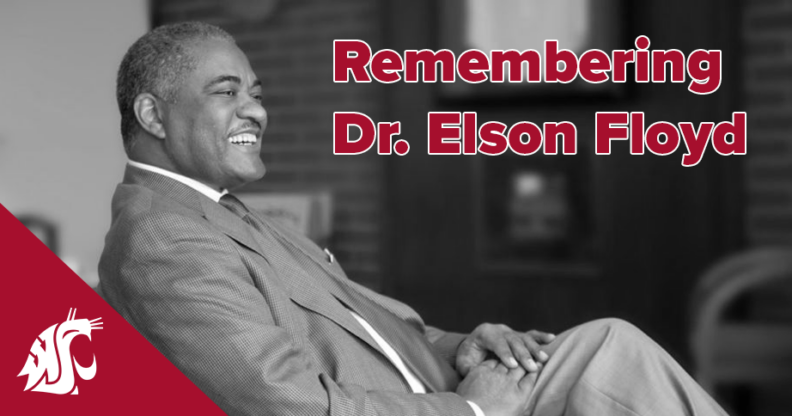
Former WSU President Dr. Elson Floyd left his mark as one of the university’s most beloved and impactful leaders. This Black History Month, we’re taking some time to remember WSU’s first Black president and his indelible legacy of higher education excellence.
Early life and career
A man of modest origins, Floyd grew up on an unpaved street in segregated Henderson, North Carolina. His father was a brick mason and his mother a tobacco factory worker, with neither of them having attended high school. However, both of his parents – especially his mother – emphasized a strong education for all their children.
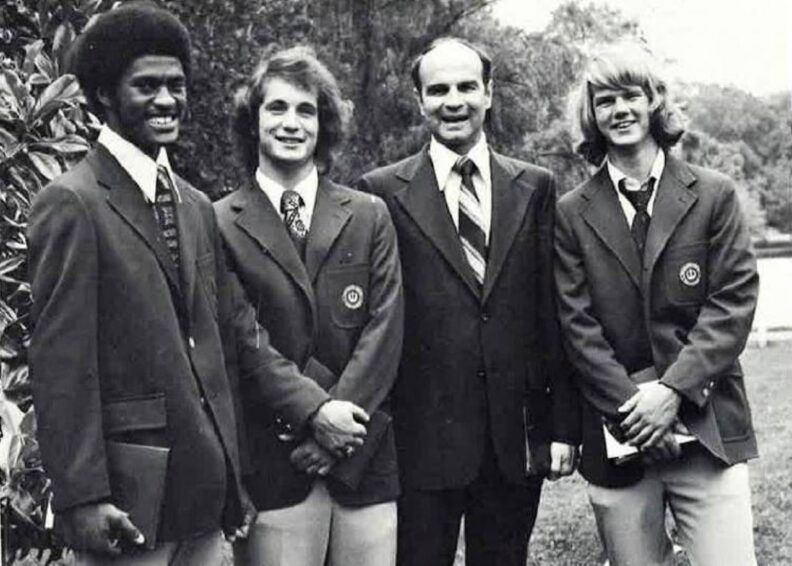
Proving himself to be a bright and hardworking student, Elson won a scholarship to attend the Darlington School in Rome, Georgia. In 1974, he became the school’s first Black graduate.
He began his career in 1978 at the University of North Carolina at Chapel Hill, where he served until 1990 and again from 1995 to 1998 in various administrative posts. He arrived at Eastern Washington University in 1990 to become vice president for student services and then vice president for administration and executive vice president. He left EWU in 1993 to become the executive director of the Washington State Higher Education Coordinating Board.
Floyd quickly made his mark on the world of higher education, displaying outstanding dedication and a passion for empowering students of all backgrounds to achieve their academic goals.


In 1998, he accepted the presidency at Western Michigan University in Kalamazoo, Michigan. He then became the 21st president of the University of Missouri in 2003. It was at this institution that Elson picked up the nickname “E-Flo”, coined by MU students. The name, inspired by his friendly nature and approachable relationship with the student body, would appear on buttons around the UM campus. The moniker would stick with Floyd for the rest of his career.
Presidency at WSU
In 2007, Floyd accepted the presidency at WSU, Washington State’s premier land-grant research university. He was the first African American to hold the position.
Soon, it became obvious that President Floyd was a favorite among WSU students. He always went out of his way to greet and visit with the students he encountered and knew many of them by name. He and the first lady, Mrs. Carmento Floyd, often attended student-centered activities, including WSU athletic events, where they cheered from the student section.
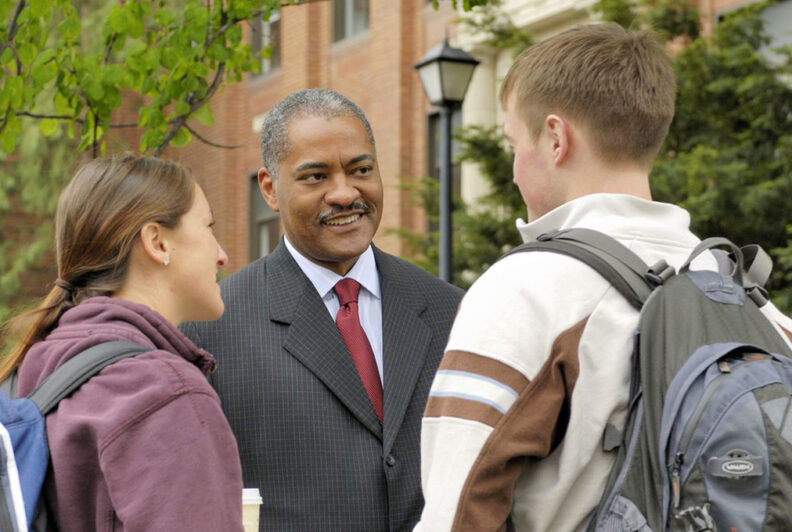
Thousands of Cougs followed the X (then Twitter) account Dr. Floyd started as a way to better connect with students. He was known for giving students his personal cell phone number and encouraged them to contact him if they needed anything. He once told a student reporter that as a college student he often felt invisible and didn’t want any WSU student to feel that way.
But his kind and caring personality wasn’t all that made Dr. Floyd a resounding success in his position. Throughout his tenure, he transformed WSU into a top-tier research university while navigating some of the worst fiscal challenges in the institution’s history. Under President Floyd’s leadership:
- Overall student enrollment grew to record highs, hitting 28,686 in fall 2014. The number of students of color nearly doubled.
- Annual research expenditures grew by 57.5 percent from approximately $213.2 million in 2007 to more than $335.9 million in 2015, placing WSU in the top 11 percent of public universities for research funding.
- All of WSU’s health sciences programs were consolidated on its Spokane campus, including the colleges of nursing and pharmacy, and the new College of Medical Science.
- WSU won bipartisan support in the Washington State Legislature to create its own, separately accredited medical school at WSU Health Sciences, Spokane.
- The University established the Edward R. Murrow College of Communication.
- WSU completed 30 major construction projects from 2007 – 2015, including one of the world’s most technologically advanced wine science centers at WSU Tri- Cities.
- The Paul G. Allen School for Global Animal Health opened with anchor gifts from Microsoft co-founder Paul G. Allen and the Bill & Melinda Gates Foundation.
- The University successfully completed the $1 billion fundraising Campaign for Washington State University.
- WSU expanded the WSU System by starting construction of the Everett Campus, which opened in 2017.
- WSU’s outstanding reputation for online education strengthened by transforming the University’s Distance Degree Program into a fully online Global Campus in 2012.
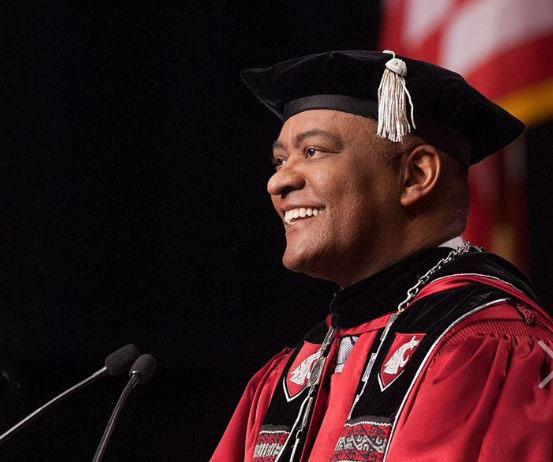
Dr. Floyd also made headlines across the country in 2008, when he asked the WSU Board of Regents to cut his salary by $100,000. Floyd said he wanted to “lead by example”, in light of the unstable economic climate and budgetary challenges the University and the nation were facing at the time. Other university presidents chose to follow in his footsteps and take pay cuts as well.
In June 2015, WSU announced that President Floyd was taking a leave of absence due to his battle with cancer. His passing at age 59 was announced a few days later.
Dr. Floyd’s Lasting Legacy
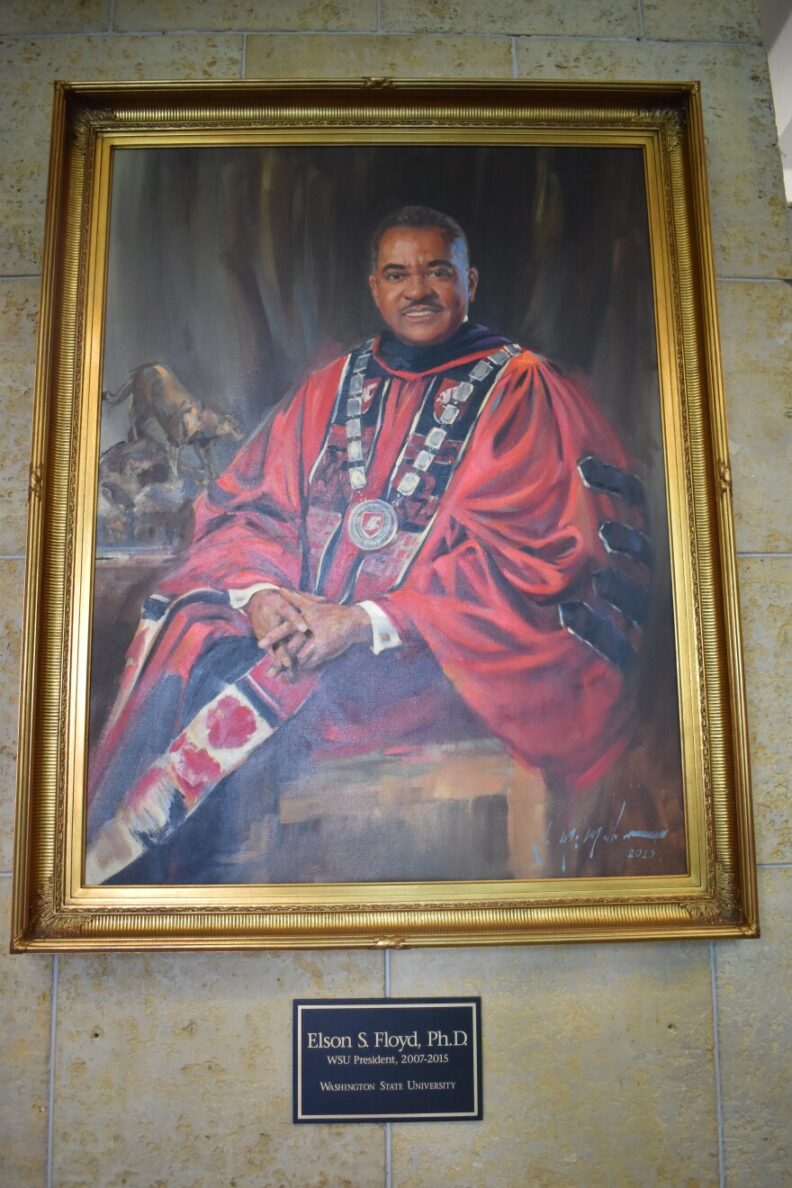
The sudden passing of President Elson Floyd sent shockwaves through the WSU community, prompting an outpouring of support from Cougs around the world. As the years have passed, the positive impact of his tenure has become even more evident.
One of Floyd’s biggest passions was his effort to bring a medical school to the WSU Spokane campus. In honor of his successful efforts, the Elson S. Floyd College of Medicine bears his name, bringing unparalleled opportunity to medical students in Eastern Washington.
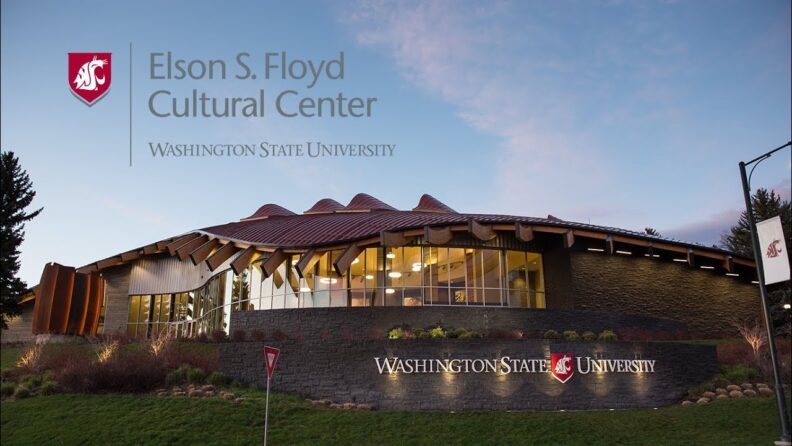
WSU also dedicated the Elson S. Floyd Cultural Center in honor of his legacy as a trailblazer for diversity and inclusion in higher education. The space is committed to fostering a welcoming and inclusive environment that celebrates diversity, cultivates cultural awareness, and strengthens community connections.
This Black History Month, let us remember Dr. Elson Floyd and the lesson his life teaches us. That, no matter where you come from, hard work, kindness, a drive to succeed, and a passion for helping others will leave a lasting, positive impact on the world around us.
Information from this article came from the WSU Insider.