WSU Global Campus eliminates barriers to higher education
By Max Eberts, WSU Foundation (visit story on WSU Foundation Site)
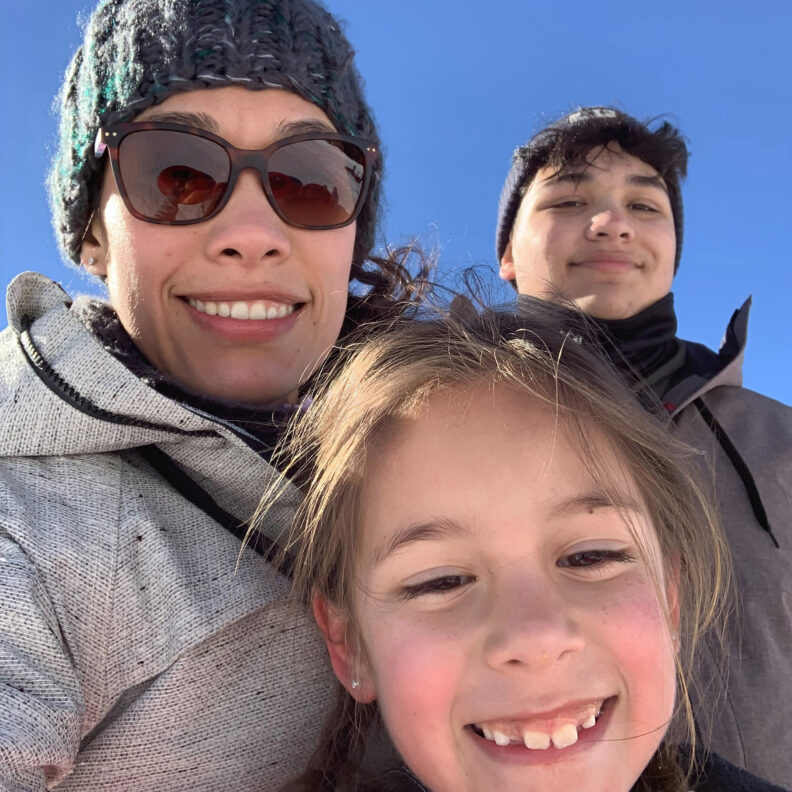
WSU Global Campus, Washington State University’s 100 percent online campus, offers flexible, high-quality education to students worldwide, including support for those overcoming significant challenges.
Part of Washington State University’s founding mission is to reach beyond the campus to elevate the citizens of Washington state through teaching and advancements that benefit society. Founded in 1992 as the Extended Degree Program and achieving campus status in 2012, the WSU Global Campus has been key to fulfilling that mission—bringing the best of WSU to thousands of students in and beyond Washington.
WSU Global Campus has excelled by coming to students wherever they are and on their terms, making a WSU education possible for students across the state, the country, and even oceans. Today, it has the second–largest student population in the entire WSU system, offering programs for 22 undergraduate degrees and 13 graduate degrees, and is ranked by U.S. News & World Report as one of the top 20 online bachelor’s programs for its undergraduate degrees.
Who are the Global Campus Cougs?
There is no typical Global Campus Cougar, but nearly half of them work full-time, 25 percent part-time; seven percent are active-duty military or veterans; one–third are first-generation students; 38 percent are students of color; 64 percent are women, 36 percent men; and their average age is 31. Eighty percent are Washington residents, and the rest come from 45 other states and 34 countries.
What they all have in common is a desire to earn a degree and make a better life for themselves. Many WSU Global Campus students could not afford college after graduating from high school. Many took on a job, soon married, and raised a family. Others realized they could not advance in their current jobs without a college degree but did not live near a WSU campus, nor did they have the means to move, find a new job, and enroll. For these aspiring and persevering Cougs, WSU Global Campus offers the freedom and flexibility they need to advance and pursue their educational goals and their dreams of making a better life.
Helping students stay on track
While WSU Global Campus, via its online nature, eliminates the barriers of distance and geography to make a college education possible for so many, it is also committed to helping its students overcome other barriers to keep them on track to earn their degrees—including a personal crisis or financial hardship.
One student, Lorena Valdez-Hernandez, a single parent working to support her family, has wanted to earn a college degree to advance her career and achieve a better life for herself and her two children. After years of juggling classes and trying to take required courses at community college that didn’t conflict with her work schedule, she learned about WSU Global Campus.
The flexibility of WSU Global Campus provided the best opportunity to complete her degree in business management. Valdez-Hernandez is now only two semesters from graduating. However, there have been numerous challenges along the way.
“The biggest challenge I have faced has been living in the U.S. as an undocumented immigrant from Mexico,” said Valdez-Hernandez.
When she was 18 months old, she arrived in California with her parents. Several years later, she returned to Mexico with her mother. Then as an 18-year-old, she returned to the United States to find work.
As an undocumented immigrant, she not only faced discrimination in the workplace, but she also worked for less pay and without healthcare insurance—all under the fear of losing her job, along with the possibility she could be reported to authorities and deported. Nearly every aspect of her life has been affected by this issue, from finding and keeping a place to live to having limited access to healthcare to dealing with the stress of her uncertain legal status.
Despite paying taxes, she was not eligible for such federally funded programs as Medicaid, the Supplemental Nutrition Assistance Program, Supplemental Security Income, or Temporary Assistance for Needy Families. Nor was she eligible for any federal grants toward her college education.
When recently hit with a number of financial challenges all at once, including her car breaking down, she wasn’t sure she would be able to continue on with her courses. Fortunately, the WSU Global Campus Extending Access Emergency Fund was there to help.
“I didn’t know what I was going to do when my only means of transportation needed major work,” said Valdez-Hernandez. “If I hadn’t received help from WSU, I wouldn’t have made it this far.”
When her son, Andres, an American citizen born in the U.S., joined the Army National Guard, he was able to sponsor her application for permanent legal status through a program called Parole in Place. In achieving this status, Valdez-Hernandez is now on a path to citizenship.
Building a gap fund
While Valdez-Hernandez’s story is unique, it is not unusual when it comes to WSU students overcoming barriers. Many WSU students, especially the growing number of nontraditional students, often face more than a few challenges outside their coursework.
Shepherding Global Campus students through the financial aid process is Jordyn Creighton, Global Campus director of financial aid and scholarships, who also has many other job responsibilities, including supporting Title IX and assisting students with financial hardships.
“Because our hardship fund is so new and our budget so small,” said Creighton, “it’s always a bit of a scramble to locate resources to help our students. We search for help from a general WSU fund or from student financial services. Increasing emergency funding and basic-needs resources has become a growing need at all our campuses—not just Global Campus.”
Often called gap funds, as they allow students to fill the financial gaps created by hardships or emergencies, WSU hardship funds are mostly distributed through the various colleges and departments. Global Campus has recently established its own gap/hardship fund to help students like Valdez-Hernandez.
“It’s a small fund right now but we’re working to grow it,” Creighton said.
Fortunately, Creighton has built such funds before. In the fall of 2013, when Creighton began working at WSU Tri-Cities as a financial aid/scholarships coordinator, she and her colleagues addressed the growing problem of food insecurity.
“It was a problem that seemed to come out of the blue, and we had to do something,” Creighton said.
And she did. Starting with bins of food in the back of her office, Creighton soon established the Cougar Cupboard in the old Tri-Cities campus cafeteria, raising money and developing a relationship with Tri-Cities Second Harvest (part of a national foodbank) to deliver food. Later, as director of student services, she sought and received financial support from Lamb Weston.
Now, in her Global Campus role, Creighton is on a similar mission, working to help students like Valdez-Hernandez.
“By growing this fund,” said Creighton, “the more we’ll be able to help students continue to earn their WSU degrees and contribute to making a better world.”
To make a gift to the WSU Global Campus or to the Global Campus Extending Access Emergency Fund, contact Kelly Newell at knewell@wsu.edu or 509-335-4247.
Make a Gift to Global Campus Extending Access Emergency Fund